The Quiet Job of a Warm-Up: Getting Attention Ready to Practice
A warm-up for attention can bridge arrival and practice: link simple movement to the session’s demands, notice what transfers and adjust the opening.
The common warm-up mistake is to treat it as a queue of movements to finish before practice begins. A warm-up for attention can do more than fill that gap: it can bring an athlete’s mind into the same space as their body. If the routine is disconnected from the session, those minutes pass without helping the athlete settle into its particular demands.
This is not about making a warm-up a performance, or promising that it will prevent injury. It is about giving practice a clear starting point. Individual needs still matter; a shared routine is a framework, not a substitute for suitable preparation or advice from a qualified professional when a health concern is involved.
What should an attention-focused warm-up prepare?
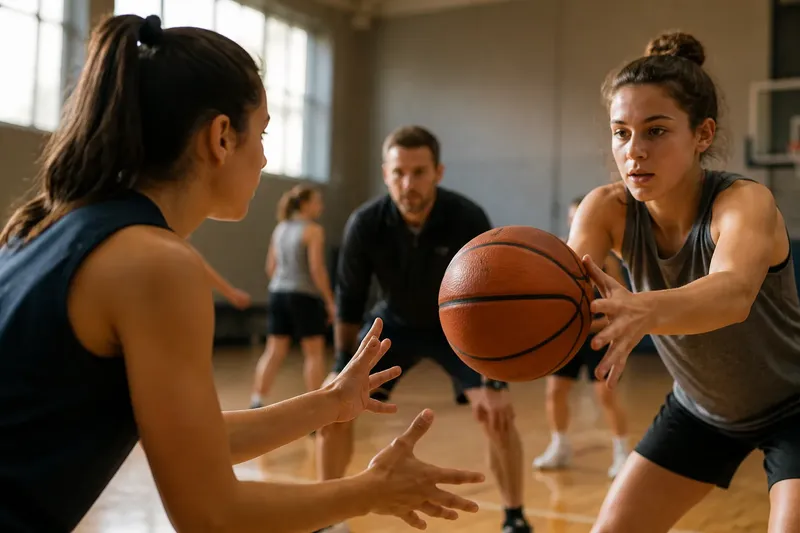
Start with the first meaningful demand of the session. That might be following a ball, finding space, responding to a team-mate or controlling a landing. The warm-up need not rehearse the whole skill. It should give athletes a gentle first encounter with the kind of information they will need to use.
Say a hockey coach plans a session on receiving while moving. The players arrive with sticks and balls, and the usual opening is a static pass across a line. Imagine the coach instead asks them to move easily while tracking the ball into the stick, then adds a partner crossing a marked lane. The expected observable result is that players begin the main drill already attending to the ball’s path and the receiver’s movement; it does not promise an immediate change in skill.
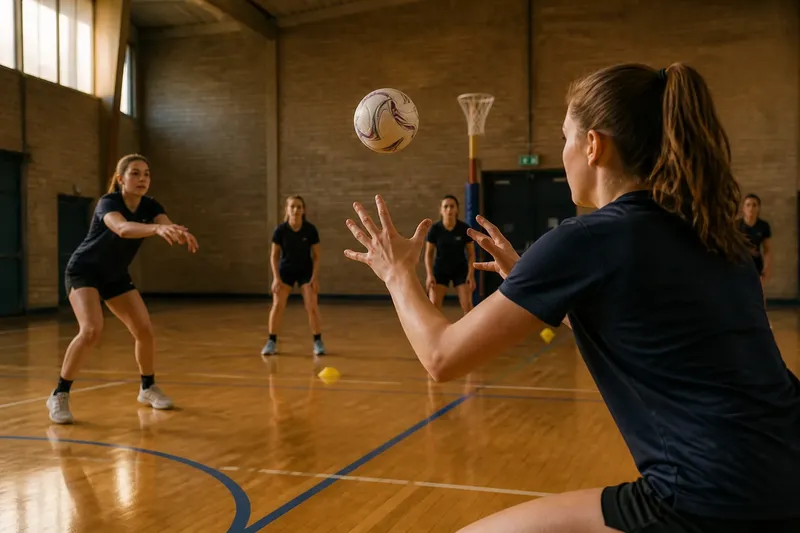
Different sports call for different starting points. A runner may pay attention to the rhythm of an easy stride before adding a change of pace. A netball player may follow a partner’s hands during a simple pass before moving into a less predictable pattern. The useful thread is the session’s demand, not a particular exercise or a long list of cues.
How can you build a warm-up around the task?
Choose one feature athletes will need to notice, then make the opening activity simple enough for them to notice it. A coach might use a ball, a floor marking, a partner’s movement or a spoken signal. Add complexity only when the first version is clear and comfortable.
- If athletes are unsure where to look, then name one visible target, such as the ball entering the hands; if that still feels busy, remove other moving targets.
- If the movement looks rushed, then slow the task and keep the cue unchanged; if athletes remain unsettled, return to an easier movement.
- If the surface or space changes the task, then let athletes attend to that feature at an easy pace; if it creates concern or discomfort, pause and seek appropriate guidance.
- If a partner’s position matters, then add a predictable partner movement; if that distracts from the main cue, keep the partner still.
- If athletes can follow the cue in a predictable pattern, then introduce a modest change in direction or timing; if they lose the cue, remove the variation.
- If the opening activity has no clear link to the session, then replace it with a simpler version of the first practice demand; if no safe, suitable link is clear, use an established individual preparation routine.
These decisions are not a universal sequence. Some athletes need a simpler start, and some sessions call for a different emphasis. What matters is that each activity has a reason the athlete can understand.
How do you know when the warm-up is getting too complicated?
A warm-up can lose its purpose when it asks athletes to remember rules instead of attending to the task. Keep the opening instructions brief. One cue such as “follow the ball into your hands” gives a player something observable to do; “focus harder” does not.
It is not worth adding novelty for its own sake or turning every warm-up into a mini-competition. Extra rules can make the opening feel clever while obscuring the simple feature athletes need to notice. A familiar activity with one purposeful change is often easier to use than a string of elaborate drills.
As the session develops, the task can become less predictable. A known passing pattern asks athletes to attend to a limited set of cues; a game-like drill asks them to respond to changing movement. The opening can point towards that shift without demanding the session’s full concentration at the outset.
What do athletes ask about warm-ups and focus?
Should every warm-up copy the main practice drill?
No. It can introduce one movement, cue or decision in a simpler setting. Leave the full challenge for the practice itself.
Can a warm-up prevent injury?
This routine is about directing attention, not promising injury prevention. If pain, a health concern or an individual preparation plan is involved, seek advice from a qualified clinician or a coach familiar with the athlete’s circumstances.
What can an athlete do when they arrive distracted?
Begin with a familiar, uncomplicated action and one visible cue, such as following a partner’s movement. A quiet check-in may help identify whether the athlete needs a simpler task or other support.
Does focused practice require music?
No. Music may suit an athlete or setting, but it can compete with spoken instructions and environmental cues. Use it only if it does not mask information needed for the activity.
How can a coach judge whether the transition is useful?
Look for signs that athletes understand what to attend to and can carry that attention into the first practice activity. If they keep asking what the opening drill is for, make its purpose clearer. If the cue disappears as soon as the main drill begins, build a closer link between the two activities rather than adding more exercises.
For example, imagine a coach starts a basketball session with an easy partner pass and asks players to track the ball into their hands. If players can do that comfortably, the coach adds a gentle change of direction while keeping the same focus. If they begin watching the direction change instead of the ball, the coach removes the extra movement and keeps the original task. The resulting decision is clear: retain the variation only when it leaves the intended focus intact.
A brief question can also clarify the transition: “What were you watching in that activity?” Connect an athlete’s answer to the next drill. A warm-up for attention earns its place when it gives the session a useful first focus, while leaving room for the coach and athlete to simplify or adapt it.