The Highlight-Reel Myth: Why a Skill Looks Easier Than It Is
The highlight-reel myth hides resets, misses and changing conditions. Learn to watch the setup and decisions that make a polished athletic skill possible.
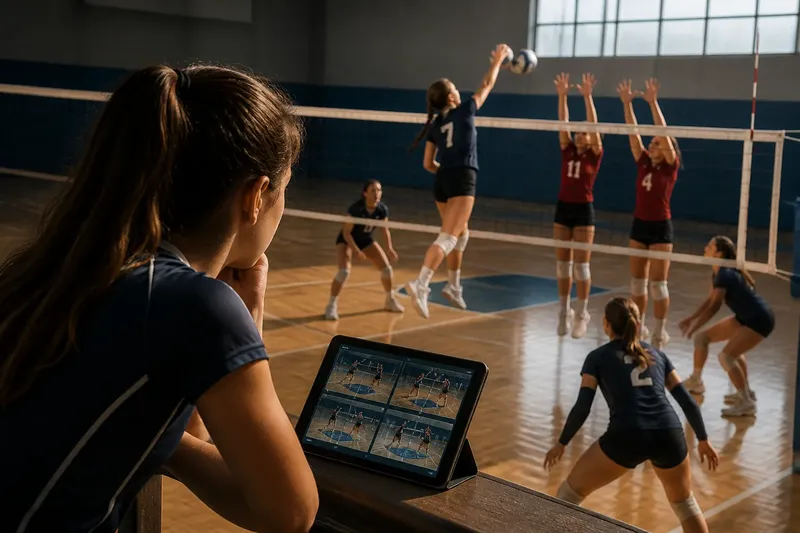
The most common mistake when watching a highlight is to treat the cleanest instant as the whole skill. That highlight-reel myth can make a difficult move look like a simple trick, and leave athletes copying the finish while missing the choices and adjustments that produced it.
Imagine a youth volleyball player, Mara, watching a short clip of a teammate’s sharp cross-court attack. The ball seems to arrive in the perfect place; the hitter jumps, turns her shoulder and sends it past the block. Mara decides the move is mostly about snapping her wrist. The clip gives her no view of the earlier rallies, the setter’s position, the blocker’s movement or the hitter’s decision to change direction.
Suppose Mara later watches the same play in a longer, invented practice sequence. The first attempt goes into the net. On another, the setter sends the ball too close to the antenna, and the hitter rolls it safely over rather than forcing the angle. The successful attack comes only after the blocker shifts inward and leaves space down the line. The result is still a striking hit, but now it looks less like a magic gesture and more like a response to a particular situation.
What disappears between the clip and the skill?
A highlight is an edit, not a neutral window. Someone has chosen where it starts, where it ends and which attempt deserves attention. That selection may be sensible for entertainment or coaching, but it changes what the viewer can infer. A crisp finish tells you that the athlete completed the movement on that occasion; it does not show how many resets came before it or what information shaped the attempt.
The missing material often includes ordinary but important events:
- Set-up: where the athlete began, what the ball or opponent was doing, and whether a teammate created space.
- Reset: a pause, repositioning or return to a starting mark before the next try.
- Miss: a mistimed approach, poor contact, loss of balance or choice that does not work.
- Adjustment: a change in speed, foot placement, angle or target after noticing what happened.
- Conditions: the surface, pace, pressure and available space that shaped the action.
These details are not padding around the “real” moment. They help define what the skill actually asks of the athlete. A volleyball attack is not just a swing. It includes judging the set, reading the block and choosing a shot that fits the space. In another sport, a sprinter’s clean start depends on a signal and a settled position; a climber’s move depends on the holds available and the body’s current balance.
How does the highlight-reel myth distort practice?
When Mara copies only the visible wrist action, she is practising a fragment without the information that gives it purpose. If the set drifts behind her, the same swing may be poorly suited to the ball. If the block closes the cross-court lane, repeating that target may mean hitting directly into it. The problem is not that the clip shows a polished movement. It is that the edit can make the polished movement appear independent of its circumstances.
That impression can also make ordinary difficulty seem like personal failure. A learner compares a first attempt with someone else’s selected best attempt and concludes that every awkward rep signals a lack of talent. Yet the clip may have left out the resets, the changed cues and the unsuccessful choices that are part of learning. The comparison is incomplete before the athlete even picks up a ball.
For a coach, the same distortion can turn feedback into a hunt for one dramatic cue: swing faster, jump higher, finish harder. Those cues may not address the actual problem. If the hitter is late because she reads the set slowly, adding force to the final motion does not solve the decision that came before it. Watching the sequence makes it easier to distinguish a movement issue from a timing or reading issue.
What should you watch before the polished instant?
Try watching a clip once without judging the finish. Follow the action from the earliest visible moment and ask what the athlete knows, what changes and what options remain. On a second viewing, pause just before the decisive movement. That pause often reveals whether the athlete is reacting to a cue or simply repeating a rehearsed shape.
For Mara’s volleyball clip, useful questions include:
- Where is the hitter relative to the setter and the net?
- Does the set arrive in the same place on each attempt?
- When does the blocker commit, and which space opens?
- Does the hitter change the shot when the first option disappears?
- What happens after a miss: a reset, a correction or another attempt under different conditions?
Notice the difference between a cue and a conclusion. “The blocker leans inside” is an observable cue. “The hitter always aims down the line” is a conclusion that one successful clip cannot support. The longer sequence may show that she goes cross-court when the block is late, tips when the defence retreats, and uses the line only when the inside lane is covered. The skill lies partly in choosing among those options.
How can you tell setup from showmanship?
A dramatic finish naturally attracts the eye: a hard hit, a sudden change of direction or a perfectly placed ball. Setup can look quiet by comparison. But small details often prepare the result: the athlete checks a defender’s position, shifts weight, shortens an approach or waits for a teammate’s cue. They may not look impressive on their own. Their value appears in what becomes possible next.
Picture an invented version of Mara’s practice. She watches a longer sequence and notices that the hitter’s final line attack follows a set slightly farther from the net, while the blocker has moved towards the middle. Mara then practises reading the set and blocker before choosing a target, rather than trying to reproduce the same arm finish on every ball. The expected observable result is not an identical highlight: it is a set of different choices that match the changing positions, including safer shots when the angle is closed.
That distinction matters when an athlete’s technique is being judged from video. A single frame can show the body shape at contact, but it cannot explain what led to that shape or whether it was the best option. A low contact point might be a flaw, or it might be an adjustment to a poor set. Context does not excuse every awkward movement; it gives the viewer a fairer basis for asking what the athlete was trying to solve.
What questions help make sense of a clip?
Does a highlight show how many attempts came before the success?
Usually, a short clip cannot answer that. Look for a longer sequence or ask whether the clip begins after a reset, rather than assuming the visible attempt was typical.
Can you learn technique from one successful attempt?
You can notice a movement to investigate, but one success does not show which parts were essential or repeatable. Compare it with other attempts and attend to the changing cues, not just the final body position.
Why do conditions matter when judging a skill?
Space, speed, surface, equipment and opponent behaviour can change the available options. A movement that suits one setting may need a different timing or target in another.
What should a beginner copy from a highlight?
Start by observing the setup and the decision, not by forcing the exact finish. A coach can help identify a suitable version of the action for the athlete’s current skill and practice setting.
Which details deserve attention, and which do not?
Not every pause or failed attempt needs a full analysis. A clip is not a complete coaching session, and trying to decode every background detail can turn useful watching into guesswork. It is not worth the effort to infer an athlete’s whole training history from a few seconds, or to argue over a tiny wrist angle when the video cannot show the ball’s full path. Focus on details that can be seen and that help explain the choice or outcome.
If you use video to guide practice, keep the question narrow. Mara might ask, “What does the blocker do before the hitter chooses the line?” That is more useful than “How do I hit like her?” The first question directs attention to a visible decision. The second asks a single edited moment to provide a complete method.
The highlight-reel myth fades when viewers treat the polished instant as one part of a sequence, not a self-contained recipe. Watch where the athlete starts, what changes, how they respond to a miss and why one option becomes preferable to another. For Mara, that shift means the memorable hit remains worth watching, but the most instructive moment may be the brief glance at the block just before it.