A First Team Practice, Seen from the Sideline
A first team practice can feel hard to read. Learn what to notice from the sideline without judging skill, interrupting drills or needing to join in.
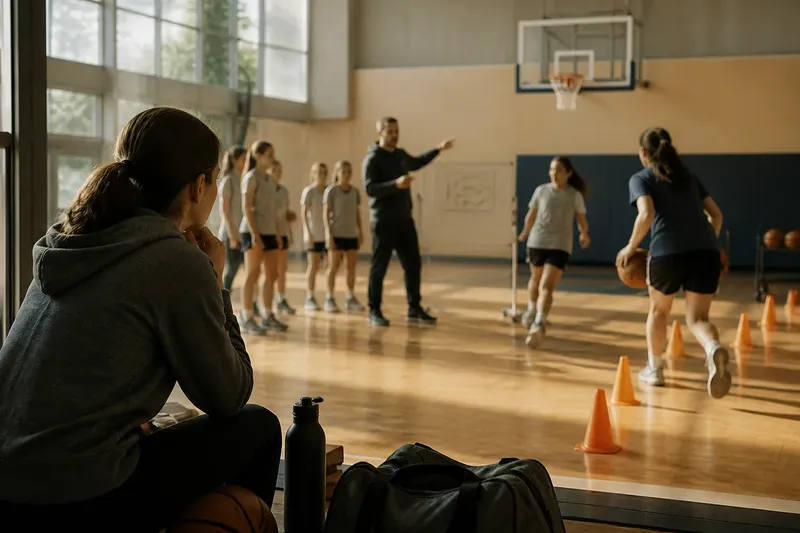
The most common mistake at a first team practice is trying to identify the best player. That turns a busy session into a ranking exercise and can leave you unsure what matters. Instead, follow the team’s changing shape: how a drill begins, how its players move through the space, and what the group does when the activity changes.
Where should you stand at a first team practice?
Ask the coach or organiser where spectators should wait before training starts. A marked touchline, the back of a sports hall or a viewing area may be appropriate; a doorway or equipment store may not be. Keep bags and bottles outside the activity space, and move only when the organiser indicates that it is safe to do so.
Give players room to focus. Avoid filming or photographing unless the team has clearly permitted it, and keep conversation low enough not to compete with instructions. If the session shifts to another court or pitch, use the route the organiser gives you rather than crossing a drill.
Pick one thread to follow, such as how the group changes from one activity to the next. You will notice more by staying with a single sequence than by trying to remember every player, pass and instruction.
How does a drill take shape?
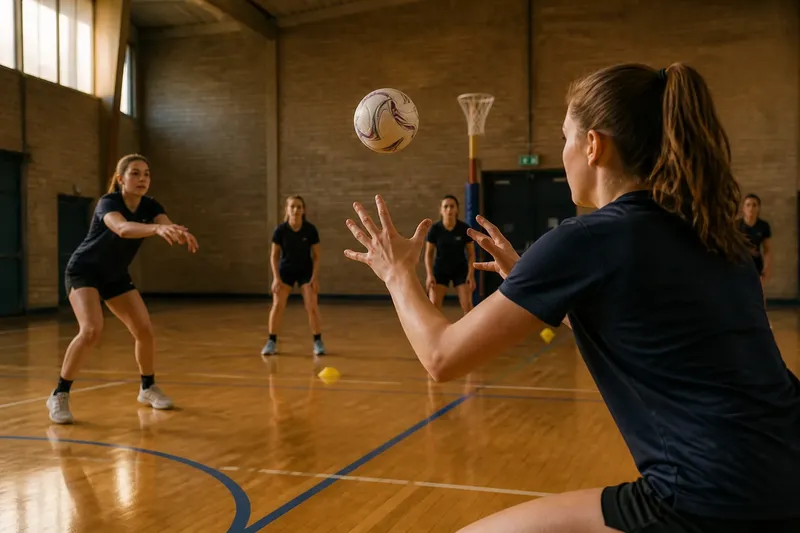
Watch the few moments before play begins. Players might collect cones, arrange themselves in pairs, form a queue or spread across a marked area. The coach may explain the task, demonstrate it or call a short cue. These actions reveal how the group gets from listening to moving.
Then follow the layout rather than one standout performer. In a volleyball session, players might rotate between a serving line and the court. In a football drill, cones can mark a route while a separate group waits clear of the running lane. The arrangement tells you where the next action is meant to happen.
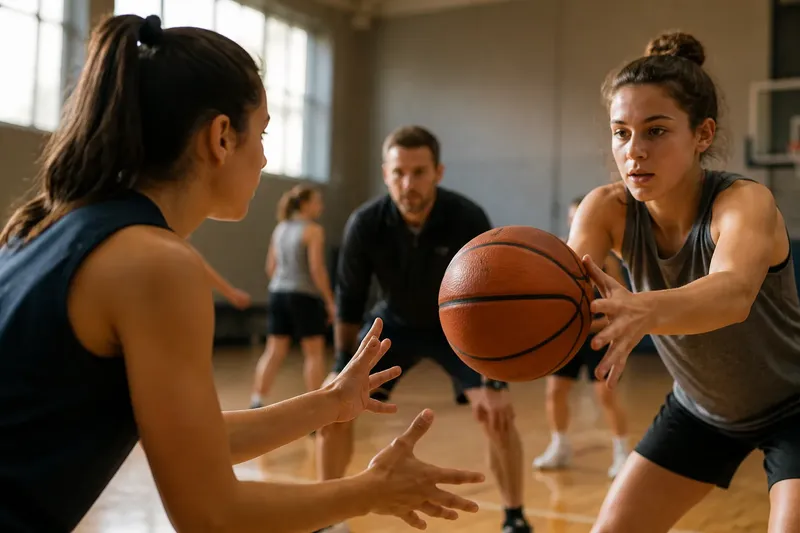
Say you are watching an invented youth basketball practice. At the start, four pairs stand beside a line of cones while the coach demonstrates a passing pattern. You notice that each pair waits until the space ahead clears, then moves to the next marker. The sequence makes the route easy to follow; it does not tell you which player is most skilled.
What changes when the drill ends?
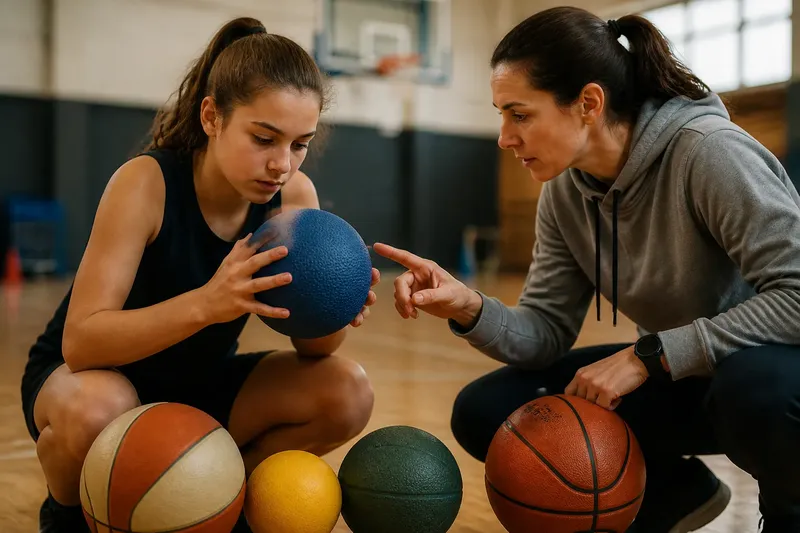
A drill’s ending often leads straight into another task. Players may return balls to a basket, collect cones, drink water or form new groups. Watch for the order: does someone gather equipment before the next explanation, or does the coach speak while everyone stays in place?
Those transitions can tell you more about the session’s rhythm than a single play. A group might move quickly into pairs, or wait while the coach resets the equipment. Neither pattern needs a verdict. It is enough to see what happens next and how the activity gets under way again.
Do not try to interpret distant conversations or guess why one player has paused. You may not have the context, and keeping a tally of every error or touch takes attention away from the practice as a whole. Let small interruptions pass unless someone responsible asks you to help.
What do new spectators often want to know?
Should you take notes during practice?
Usually, a few words afterwards are plenty. Note one way the group arranged itself and one transition you found easy to follow. That gives you a memory of the session without turning your visit into a running report.
Is it all right to ask the coach a question?
Ask before or after practice if you can, rather than during an active drill. “Where should I watch from?” is clear and brief; if the coach is occupied, the organiser may be the better person to ask.
Do you need to understand every drill?
No. You can follow how players arrange themselves, where equipment goes and what starts the next repetition without knowing every rule. If a drill interests you, listen to the coach’s explanation and watch how the group puts it into action.
What if you hope to join the team?
Ask the coach or organiser what the next step is, such as attending a trial or joining a beginner group. A sideline visit gives you a glimpse of the session, but the organiser can explain what participation involves.
What is worth remembering afterwards?
Recall one sequence rather than trying to judge the whole team: how the players formed up, where they moved and what followed when the drill stopped. A plain description such as “the next pair stepped in after the cones were reset” is more useful than a broad label based on one visit.
It is not worth memorising drill names or counting every pass just to make the session feel legible. For a first team practice, the useful detail is often the simplest one: how the group moves from explanation to action, then makes room for what comes next.